The XXXI International Congress of Engine Builders was held in Kharkiv on September 8–11, 2026. Staff members of ITM NASU and SSAU were among the participants.
Inna Bashlii, Senior Researcher at the Department of Dynamics of Hydromechanical and Vibration Protection Systems (with co-authors Leading Researcher Oleksii Nikolayev, Senior Researcher Roman Marchan, and Researcher Samir Vekilov), presented a paper on the specifics of numerically determining the parameters of spatial acoustic gas oscillations in the combustion chamber of a liquid-propellant propulsion system.
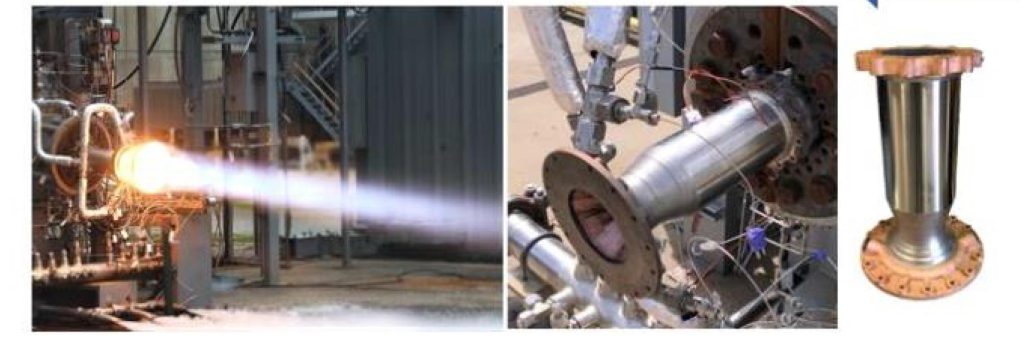
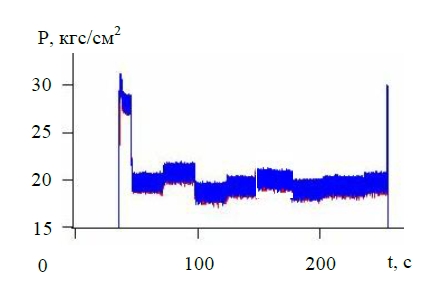
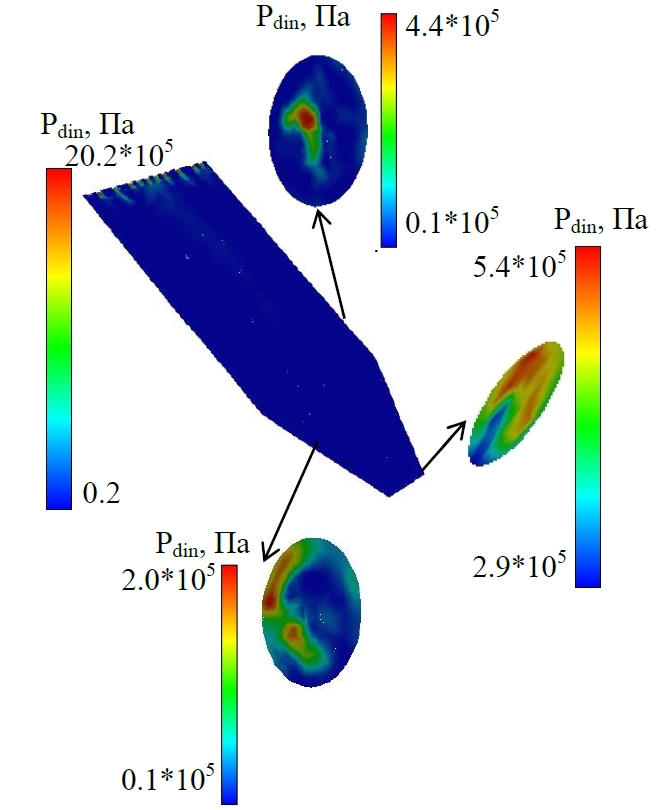
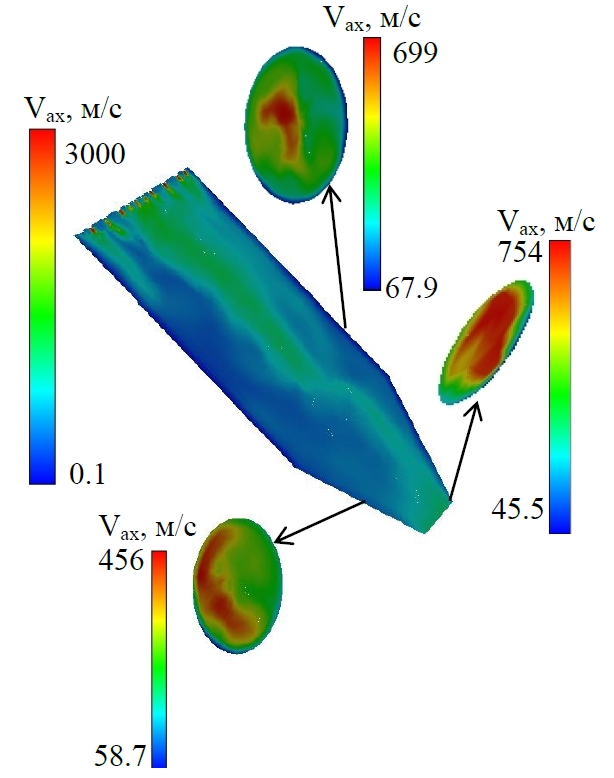
This line of research is relevant because of technological progress in the rocket and space industry, in particular because modern liquid-propellant launch vehicles that deliver payloads to orbit use low-cost, safe, and reliable engine systems based on advanced components and materials and on additive manufacturing. In the work presented, to study the dynamic instability of the combustion chamber, the authors mathematically modeled the unsteady gas flow in the chamber of an experimental liquid-propellant propulsion system produced by additive manufacturing. The flow parameters of the combustion products in the chamber of the propulsion system were analyzed numerically with the ANSYS Fluent finite element analysis software, using the Large Eddy Simulation and k-ε turbulence models for 2D and 3D models of the chamber. The simulation results obtained with the LES turbulence model for the 3D chamber model agreed closely with data from hot-fire tests of the combustion chamber in terms of dominant frequency and amplitude characteristics, and also reproduced the non-axisymmetric nature of the self-excited oscillations of the combustion products and the associated vortex structure of the flow.
Implementing the proposed approach will make it possible to optimize the design of propellant feed systems and substantially reduce the amount of full-scale development testing needed for advanced liquid-propellant propulsion systems.
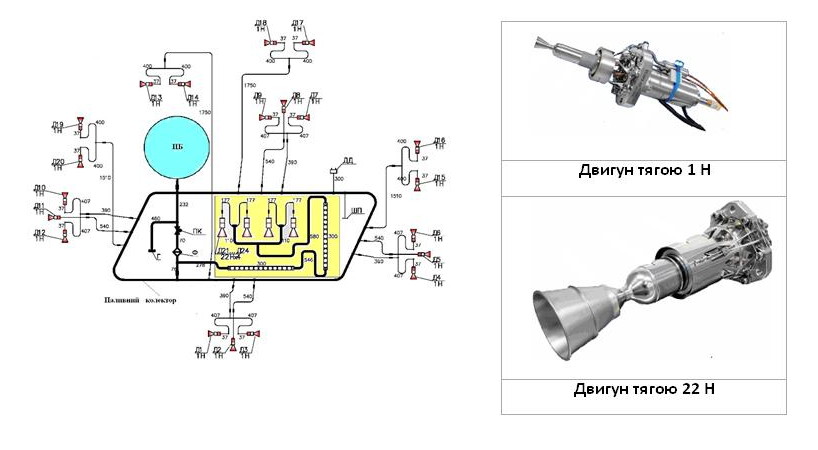
Yurii Knyshenko, Acting Head of the Department of Aerogas Dynamics and Technical Systems Dynamics, also spoke at the Congress. He presented the paper “A method for calculating the parameters of ‘green’ propellant thrusters and its verification,” co-authored with V. M. Durachenko, a department head at the State Enterprise Pivdenne Design Office named after M.K. Yangel.
The paper considers monopropellant systems of liquid rocket thrusters that use one type of “green” propellant. These thrusters are designed to provide control forces during spacecraft motion to compensate for disturbances of various origins, during maneuvering and stabilization in orbit. The authors present a mathematical model of a spacecraft monopropellant propulsion system running on the low-toxicity propellant LMP-103S; the model takes into account unsteady hydraulic processes in the propellant feed lines, the operation of the electrically controlled propellant valves, and gas-dynamic processes in the reaction chambers and nozzles of thrusters of different thrust levels. The model was verified against the results of test-stand and flight tests of individual thrusters conducted by the developer of the propellant and the thrusters. The proposed approach makes it possible to substantiate the parameters of the propellant feed lines that supply the thrusters in various operating modes, taking into account the mutual influence of the thrusters.